Bluebuck
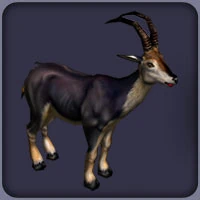
Expansion: Extinct Animals
Fame: 0.5 stars
Base Donation Amount: 60
Max Tour Value: 40
Adopt Rarity: 1
Prey Classification: Medium Prey (adult), Small Prey (young)
Zoopedia
Conservation Status: Vulnerable
Class: Mammals (Mammalia)
Order: Even-Toed Ungulates (Artiodactyla)
Family: Bovids (Bodivae)
Genus: Hippotragus
Species: leucophaeus
Grassland
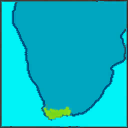
Southern Africa

To unlock the bluebuck in challenge or campaign games, you must earn a 1/2-star zoo fame rating for your zoo.
The Bluebuck was the first South African mammal species to become extinct in modern history. When European immigrants entered the region in the 17th century, Bluebucks may have already been on the decline. Europeans further thinned Bluebuck populations through hunting and the rapid conversion of grassland to farmland, accelerating the extinction of this already-threatened antelope. The last known Bluebuck was killed by a hunter around 1800. The Bluebuck, also called the blue antelope, looked similar to other species in the antelope family. It had two medium-length sweeping horns, no mane, and a darker coat on top with a white underbelly. Hippotragus leucophaeus lived in the southwestern coastal area of South Africa and roamed the region's well-watered grasslands. The delicate Bluebuck may have preferred blossoms to bushes: According to modern research, the particular grasslands that this species inhabited were -- and are today -- some of the most biologically rich lands on Earth. Not only is the soil especially fertile, but the plant life is also colored by an abundance of flowers, mostly of the daisy family. Diet: herbivore; size: 1 m (3.5 ft) tall at the shoulder; weight: up to 160 kg (350 lb).
Fun Bluebuck Facts
- Are you blue? Although Bluebucks found in museums today show no blue color, its name reflects descriptions of live animals. The blue tone may have come from the combination of its black and yellow hairs and the sheen of its dark skin.
- Just four preserved and mounted Bluebuck skins, two skulls, and miscellaneous bones remain in museums from what was a thriving population 2,000 years ago.
- Two living relatives of the Bluebuck are the Roan antelope and the Sable antelope, both of which are classified as "horse antelopes" because of their size and horselike bodies.
Errors and Trivia
The Zoopedia entry has a typo, spelling "Bodivae" instead of Bovidae. What, did you think that was my typo? It also consistently capitalizes the names of the bluebuck and other animal species—they're not proper nouns, Blue Fang!
Bluebuck Exhibit Guide
It needs at least one other member of its species in its exhibit.
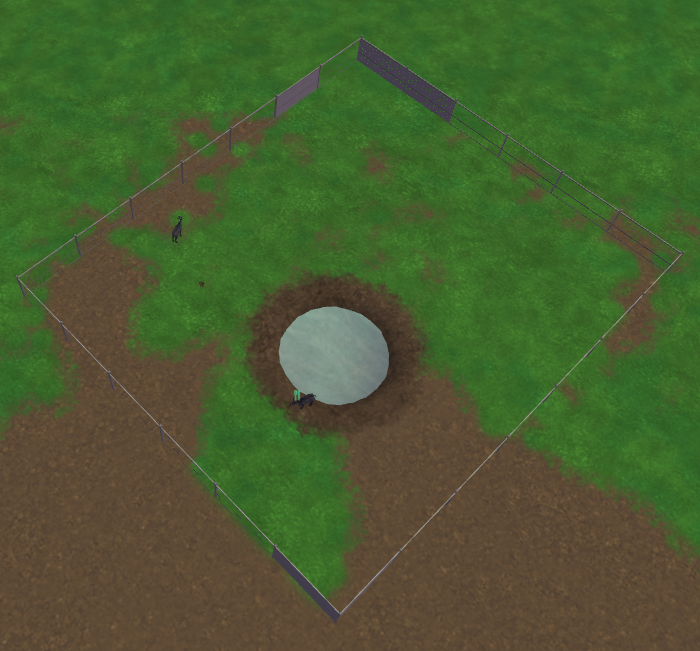
The cheapest exhibit plan I could find that takes up more than 82.5 squares is an oblique rectangle costing $1,950. In the future I may do an article on how using diagonals affects Zoo Tycoon 2 fencing costs.
Adoption cost: $3,000
Space for first animal: 70 squares (280 triangles)
Space per additional animal: 12.5 squares (50 triangles)
Cheapest Fence: Chain link fence or hedge fence, $75/square, $1,950 total for a 2-animal exhibit
Food: None required (grazes), eats grass
Enrichment: None required, uses salt lick
Shelter: None required, uses shade structure or stables
Native Biome: Grassland (+3)
Other Compatible Biomes: None without using misty spring
Swims?: No
Total Cost: $7,950 for a 2-animal exhibit, excluding foliage or rocks
Compatible Animals:
- aardvark
- addax
- Barbary ape
- Asiatic black bear—not compatible in community fixes
- spectacled bear
- American beaver
- secretarybird*
- American bison
- African buffalo
- dromedary camel
- giant camel
- caracal*
- caribou
- Doedicurus
- Asian elephant
- dwarf Sicilian elephant
- greater flamingo
- Thomson's gazelle
- gelada
- gemsbok
- gerenuk
- Masai giraffe
- reticulated giraffe
- hippopotamus
- Przewalski's wild horse
- ibex
- koala
- ring tailed lemur
- meerkat*
- Nile monitor*
- moose
- okapi
- ostrich
- common peafowl
- rockhopper penguin
- quagga
- ratel*
- African spurred tortoise
- Triceratops
- warrah*
- common zebra
*Will eat baby bluebucks.